

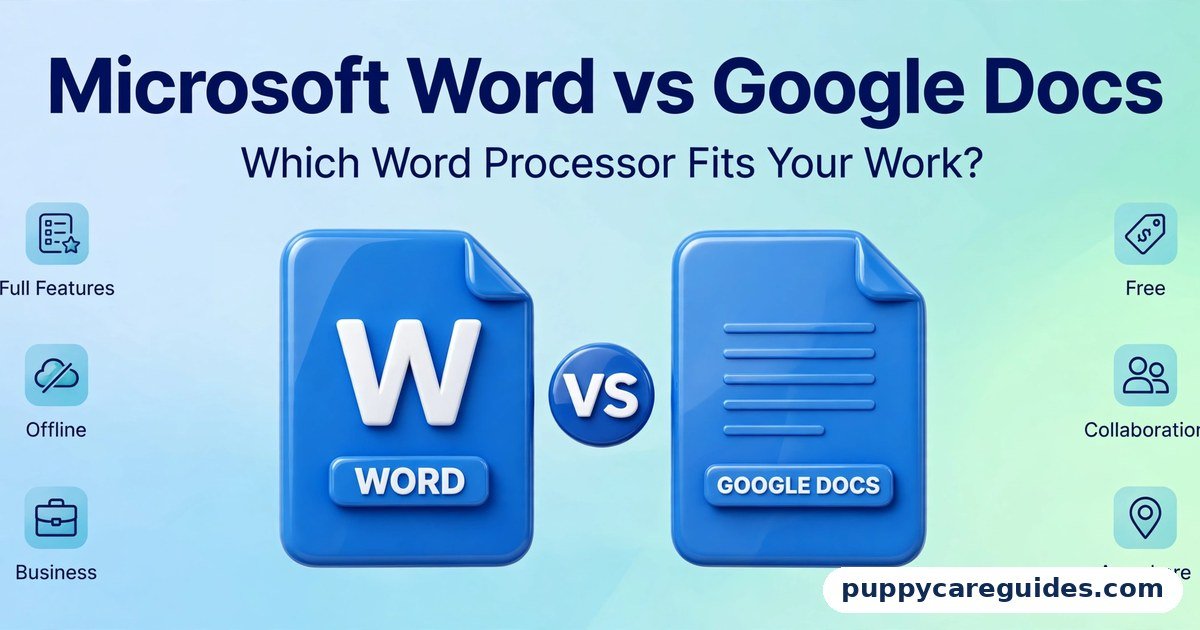
Microsoft Word vs Google Docs
Quick Answer
Use Google Docs if your writing is shared — team assignments, school projects, anything several people edit together — and you want it free, auto-saved, and reachable from any browser. Use Microsoft Word if your documents are serious solo productions — long reports, complex formatting, official documents — or if your office runs on Word files and often expects you to. The rest of this guide proves it: the differences are small for most people, but the wrong tool in the wrong place wastes hours — so get the choice right and the software stops mattering.
Both tools are free to try in some form, and both open each other’s files, so you are never trapped by your decision. Choose for how you work, not for what the logos promise — that is the real lesson of this comparison, and the rest of this guide shows you how to make it. That is the short answer to microsoft word vs google docs.
For more technical background, see the Google Docs overview on Wikipedia.
Table of Contents
Docs is a free, browser-based word processor from Google that made real-time collaboration normal: everyone types in the same document, sees each other’s cursors, and never presses Save. Word is Microsoft’s flagship word processor, deeper and more powerful than Docs in formatting, long documents, and professional features, and it works fully offline as a real desktop program — but its full version is paid, through Microsoft 365 or a one-time licence. Most people should learn Docs first for everyday writing and Word for professional depth; happily, skills transfer between them easily.
Introduction
Every resume, report, essay, and letter eventually becomes a document, and the two tools competing to write it are Microsoft Word and Google Docs. They look similar — a blank page, a toolbar, a blinking cursor — but they were born in different eras and it shows in every detail.
Word was born in the desktop era: you install it, your files live on your computer, and you send copies to other people. Docs was born in the browser era: nothing to install, your files live in Google Drive, and you do not send copies at all — you share one living document that everyone edits together. That single difference explains the collaboration gap, the price gap, the offline gap, and most arguments about which one is “better.”
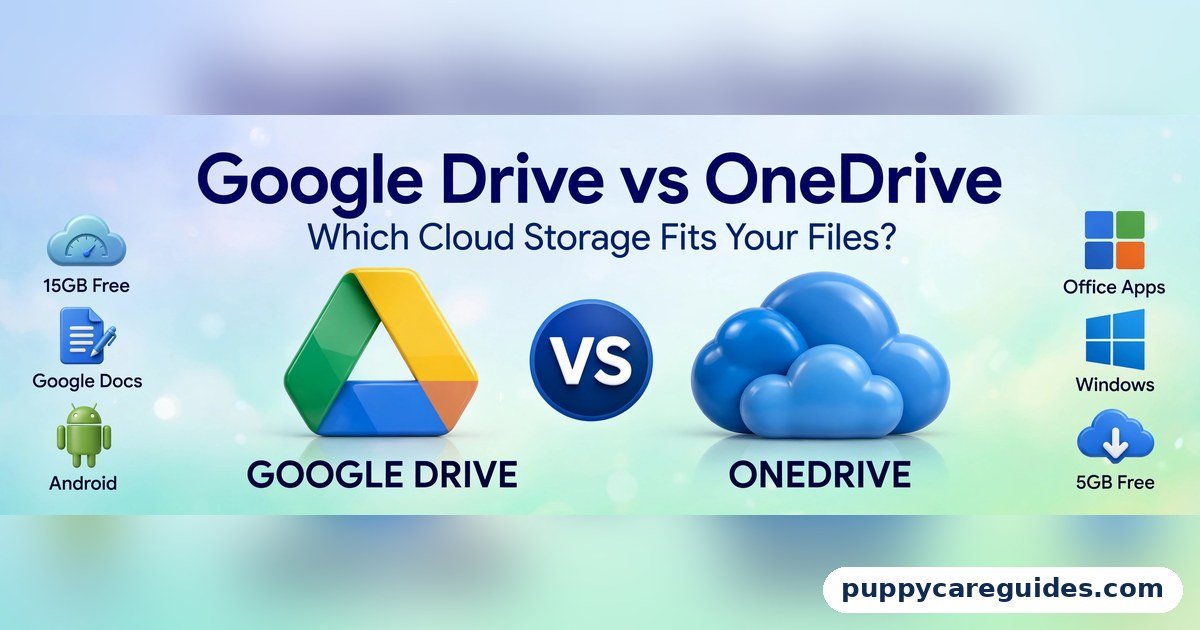
This guide compares Microsoft Word vs Google Docs in plain language: price, collaboration, offline truth, features, compatibility, and a simple rule for choosing. If you are also deciding where those documents should be stored, our Google Drive vs OneDrive guide covers the storage half of the same decision. The microsoft word vs google docs decision is simpler than it looks once you know what to check first.
The table below sums up microsoft word vs google docs at a glance.
microsoft word vs google docs: Quick Comparison Table
| Feature | Microsoft Word | Google Docs |
|---|---|---|
| Price | Paid (Microsoft 365 subscription or one-time licence); limited free web version | Free with a Google account |
| Where it runs | Installed program on Windows/Mac; also web and mobile versions | In your browser; mobile apps available |
| Offline use | Full — it is a desktop program first | Possible, but must be set up in Chrome beforehand |
| Collaboration | Good — real-time co-authoring in modern versions | Excellent — the benchmark for live team editing |
| Auto-save | Yes, when the file is stored in OneDrive | Always — every keystroke is saved |
| Features depth | Deepest available — mail merge, advanced formatting, long-document tools | Solid essentials; fewer advanced features |
| File compatibility | The .docx standard itself | Opens and exports .docx; occasional formatting shifts |
| Sharing | Send file or OneDrive link | Share a link in seconds; fine-grained permissions |
| Version history | Available via OneDrive/SharePoint | Built in, detailed, and famously easy to use |
| Best for | Professional reports, complex documents, offline work | Teams, students, quick shared writing, free access anywhere |
Note: Word also has a free version on the web (Word for the web) with reduced features, and Docs is entirely free — but “free” Docs is funded by your Google account relationship, as with all Google services.
What Is Microsoft Word?
Microsoft Word is the world’s standard word processor, part of the Microsoft Office family since the 1980s and the creator of the .docx format that remains the default language of business documents. In its full form it is a program you install on Windows or Mac, obtained either with a Microsoft 365 subscription (which keeps it always updated and bundles OneDrive storage, as explained in Google Drive vs OneDrive) or, less commonly now, a one-time Office licence. The whole microsoft word vs google docs story starts here.
Word’s strength is depth. It handles a 300-page report with a table of contents, footnotes, cross-references, and section breaks without breaking a sweat. It does mail merge for printing a thousand personalised letters, tracks changes with legal-grade precision, and offers formatting control down to the spacing between individual letters. When a document must look exactly right on paper or PDF — a thesis, a contract, a company report — Word is the tool professionals reach for.
Real example: An office prepares its annual report: 80 pages, financial tables pasted from Excel, charts, headers that change per section, and a board that reviews with tracked changes. Word absorbs all of it calmly, works on the manager’s laptop on a train with no internet, and produces a pixel-perfect PDF. This is Word’s home ground. In any microsoft word vs google docs comparison, Microsoft Word stands for the most powerful formatting and full offline control.
What Is Google Docs?
Google Docs is Google’s free word processor that runs in your web browser and stores everything in Google Drive. There is nothing to install and nothing to save: every word is stored automatically the moment you type it, and a detailed version history remembers the document’s whole life. The microsoft word vs google docs gap is easiest to understand right here.
Docs’ defining strength is collaboration. Share a link, and your whole team is inside the same document — typing in different paragraphs, leaving comments in the margin, suggesting edits instead of overwriting, and chatting through decisions while the document updates live for everyone. This is why Docs conquered schools and startups: the group project problem — five people, five versions, total chaos — simply disappears. Autosave and version history are where microsoft word vs google docs feels most different day to day.
Real example: Four students write a group assignment the night before the deadline. Each takes a section in the same document, the teacher watches progress in real time and drops comments, one student accidentally deletes a paragraph and restores it from version history in seconds, and nobody emails a single file. That calm, shared way of writing is Docs at its best. In any microsoft word vs google docs comparison, Google Docs stands for effortless real-time collaboration and sharing.
microsoft word vs google docs: Key Differences Between Microsoft Word and Google Docs
1. Price: free vs a subscription worth understanding
Google Docs costs nothing: a free Google account is the whole price of entry, for the full product — there is no “pro” Docs waiting behind a paywall for ordinary users. Word’s full desktop version is paid software: most people get it through Microsoft 365 (a monthly or yearly subscription that also includes Excel, PowerPoint, and 1 TB of OneDrive storage), and a reduced Word exists free on the web. If your employer or university provides Microsoft 365 — many do — Word costs you nothing extra, and the price argument flips. Check what you already have before letting price decide.
2. Collaboration: good vs the gold standard
Modern Word does support real-time co-authoring when the file lives in OneDrive, and it works well. But Docs was designed for nothing else: sharing takes seconds, permissions are obvious (view, comment, edit), comment threads and suggestions feel effortless, and a dozen people can edit at once without the document breaking a sweat. For a solo writer this difference is invisible. For any document with more than one author, Docs is simply the smoother tool — and that is most school and team writing.
3. Offline: the honest truth for both
Word is an installed program: offline is its natural state, full features, no setup, no warning. Docs is a browser tool: without internet it cannot even open — unless you prepare it. In Chrome, with the Google Docs Offline extension and the offline setting enabled, you can open and edit documents offline and they sync when you reconnect. It works, but it must be arranged before the train journey, not during it. Frequent travellers and unreliable-internet areas favour Word; reliably connected writers never notice Docs’ weakness.
4. Features: the essentials vs the deep toolbox
For the documents 90% of people write — letters, essays, notes, simple reports — Docs has everything: styles, tables, images, headers, footnotes, word count, even voice typing. Word’s advantage appears at the edges: mail merge, advanced find-and-replace with formatting, precise layout control, complex numbering, bibliography tools, and graceful handling of very long documents. Professionals feel these edges weekly; casual writers may never touch them in a decade. Be honest about which writer you are.
5. Compatibility and the .docx question
Word owns the .docx format, so Word files are perfect in Word by definition. Docs opens .docx files well and exports to .docx, PDF, and more — but “well” is not “perfectly”: complex formatting (intricate tables, text boxes, unusual fonts) can shift slightly when a document travels between the two.
For simple documents you will never see a difference. For a formally formatted submission — a resume to a strict employer, a thesis with exact layout rules — build it in the tool it will be judged in, which is usually Word, or export a PDF from Docs so the layout is frozen exactly as you made it. Our PDF vs DOCX guide explains when each format should leave your desk.
6. Saving and safety: auto-save changes everything
Docs saves every keystroke automatically and keeps a browsable history of every version, forever. A crashed laptop loses you nothing — not one sentence.
Word with files in OneDrive also auto-saves and versions well, but a Word file stored only on a local disk still depends on you pressing Save and on the machine surviving. Generations of students have lost essays to the old Word way of working; the modern fix exists, but Docs gives it to you by default, with no setup and no discipline required. Every microsoft word vs google docs difference above comes back to power on your own machine versus teamwork in the browser.
microsoft word vs google docs: Best Uses of Microsoft Word
- Professional and official documents — reports, proposals, contracts, theses
- Long, complex documents with contents pages, references, and sections
- Offline work — travel, fieldwork, and unreliable internet
- Offices standardised on .docx, where files must arrive perfect
- Mail merge and formal printing tasks
- Anyone whose employer or university provides Microsoft 365 — use the depth you already own
microsoft word vs google docs: Best Uses of Google Docs
- Team writing — group assignments, shared reports, committee documents
- Students — free, auto-saved, and openable on any computer at school or home
- Quick everyday documents — notes, letters, drafts, lists
- Writers on shared or borrowed computers — your documents live in your account, not the machine
- Anyone who has ever lost work to an unsaved file or a dead laptop. For teams editing together live, microsoft word vs google docs usually ends in Google Docs’ favour.
Pros and Cons
Microsoft Word — Pros
- The deepest feature set of any word processor
- Perfect .docx compatibility — it is the standard
- Full offline power as an installed program
- Handles very long and complex documents gracefully
Microsoft Word — Cons
- Full version is paid (Microsoft 365 or licence)
- Collaboration is good but less effortless than Docs
- Auto-save depends on storing files in OneDrive
- Can feel heavy and cluttered for simple writing
Google Docs — Pros
- Completely free, with nothing to install
- Best-in-class real-time collaboration and sharing
- Auto-save and version history protect every word by default
- Works on any computer with a browser, including old ones. That is the microsoft word vs google docs balance in one line.
Google Docs — Cons
- Needs internet unless offline mode is set up in advance
- Fewer advanced features for complex professional documents
- Complex .docx formatting can shift when files move between tools
- Requires a Google account and comfort with cloud storage. This is where the microsoft word vs google docs choice really bites.
microsoft word vs google docs: Which Should You Choose?
- Beginner / everyday user: Google Docs. It is free, it saves itself, and it is on every computer you will ever sit at. Learn it first.
- Student: Docs for group work and drafts; Word (often free through your institution) for final formal submissions with strict formatting. Knowing both is a genuine career skill.
- Professional: Word, if your industry exchanges .docx files and expects formal documents — which most do. Keep Docs for brainstorming documents and anything written jointly with clients.
- Writer / creator: Docs for drafting with editors and beta readers in the document with you; Word for the final manuscript polish if your publisher’s workflow demands it. Whichever side of microsoft word vs google docs you pick, save a backup copy before you share the file. Decide microsoft word vs google docs by how you work — solo and offline, or live with a team — and the choice makes itself.
microsoft word vs google docs: Common Mistakes
- Emailing document copies back and forth. This is the old world’s worst habit — five versions, no one sure which is current. Share one link (Docs, or Word in OneDrive) and let everyone work on the same living document.
- Writing a formally formatted document in the “wrong” tool. If the final judge opens Word, build the final version in Word — or deliver a PDF. Formatting that shifts at the last step is a self-inflicted wound.
- Assuming Docs works offline automatically. It does not, until you enable offline mode in Chrome on that computer. Set it up on a calm day, not in a departure lounge.
- Paying for Microsoft 365 without checking existing access. Students and employees very often already have it free through their institution. Check before subscribing.
- Ignoring version history until disaster strikes. Both tools can resurrect yesterday’s draft — Docs makes it especially easy. Learn where the history lives in your chosen tool today, while you do not need it.
- Using neither tool’s styles. Headings, titles, and styles look like decoration; they are actually structure. They generate your table of contents, make navigation painless, and keep long documents consistent in both programs. Most microsoft word vs google docs regrets come from exactly these avoidable errors.
microsoft word vs google docs: FAQs
Does Google Docs change my formatting when I open a Word file?
For ordinary documents — text, headings, simple tables, images — no visible change. For complex documents, small shifts can occur: intricate table layouts, text boxes, and special fonts are the usual casualties, because the two programs render some features differently. The safe workflow for an important formal document is to finish it in the program it will be opened in, or to share it as a PDF, which freezes the appearance completely. This is the core of the microsoft word vs google docs debate.
Can Google Docs work without the internet?
Yes, with preparation. On a computer using the Chrome browser, install Google’s offline extension and turn on the offline setting in Google Drive; your recent documents then open and edit without a connection, and changes sync when you are back online. Mobile apps also allow marking specific files for offline use. What you cannot do is set this up after losing your connection — arrange it in advance if you travel or have unreliable internet. That is microsoft word vs google docs in practice.
Which one should I learn first for a job?
Learn both, in this order: Google Docs first, because it is free, instant to access, and its skills (styles, comments, sharing, version history) transfer almost completely to Word. Then learn Word’s professional layer — mail merge, tracked changes, long-document structure — because most established offices still run on Word files, and job adverts name it. In practice, employers care less about which tool you prefer and more that you can produce a clean, well-formatted document in whichever one they use. That is the microsoft word vs google docs difference where it counts.
Is Google Docs really free, or is there a catch?
It is genuinely free for individuals, with no trial period and no feature paywall for normal use. The “catch,” if it can be called one, is the standard Google arrangement: you need a Google account, your documents live on Google’s servers, and the free storage they sit in is your 15 GB Google account quota (shared with Gmail and Photos, as covered in Google Drive vs OneDrive). Businesses can pay for Google Workspace to get more storage and admin controls, but a home user may never need to. That is microsoft word vs google docs in daily use.
Can I open Google Docs files in Word and Word files in Docs?
Yes, in both directions. Docs opens .docx files for editing and can download any document as a .docx; Word opens documents exported from Docs without complaint. What crosses the bridge perfectly is the content — words, headings, basic formatting. What sometimes wobbles is elaborate layout. For everyday documents, move freely; for a document whose exact appearance is being judged, finish where it will be read. That is the microsoft word vs google docs difference that matters most.
microsoft word vs google docs: Final Verdict
Shared writing and zero cost = Google Docs. Deep, formal, offline documents = Microsoft Word.
These tools are not really fighting over the same desk. Docs is the world’s shared notebook: free, always saved, and happiest with five cursors blinking in it at once. Word is the professional’s printing press: deeper, stricter, and unbeatable when one document must be long, complex, and perfect. If you remember only one line, make it this: count the authors — one author with formal demands points to Word; more than one author points to Docs, every time. That is the microsoft word vs google docs choice in short: Microsoft Word for complex solo documents, Google Docs for easy team collaboration.
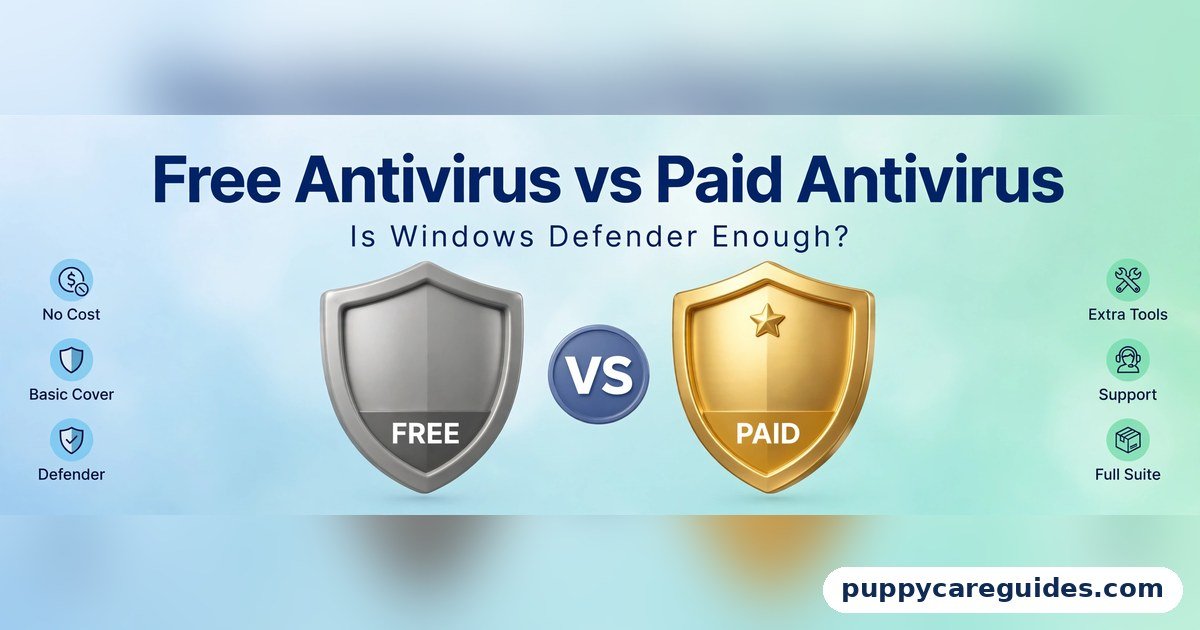
Next: Free Antivirus vs Paid Antivirus — now that your documents are safe in the cloud, what actually protects the computer itself?
Related Articles
- Google Drive vs OneDrive — where documents from both tools are stored
- Chrome vs Firefox — the browser Docs lives in, and Word’s web version too
- Windows vs Linux — the systems these word processors run on (and what replaces them there)
- Free Antivirus vs Paid Antivirus — keeping the machine that holds your documents safe
- PDF vs DOCX — from our File & Document Formats series, on sending the finished document





Leave a Reply